

If you’re a dog lover, you know the struggle — those puppy eyes staring at you while you eat! Sharing your food is tempting, but not everything humans eat is safe for dogs. Some foods are healthy, while others can be downright dangerous for dogs.
In this detailed guide on human foods dogs can and can’t eat, we’ll break it all down in a clear, friendly way, so you can keep your furry friend safe and happy.
Why Knowing Human Foods for Dogs Matters
Dogs don’t digest food the same way we do. While some human foods can provide dogs with extra vitamins, fiber, or protein, others can cause serious health issues like vomiting, kidney damage, or even toxicity.
That’s why it’s important to know the do’s and don’ts of feeding dogs human food.
Foods that Dogs CAN Eat
Here are some safe options you can share in moderation:
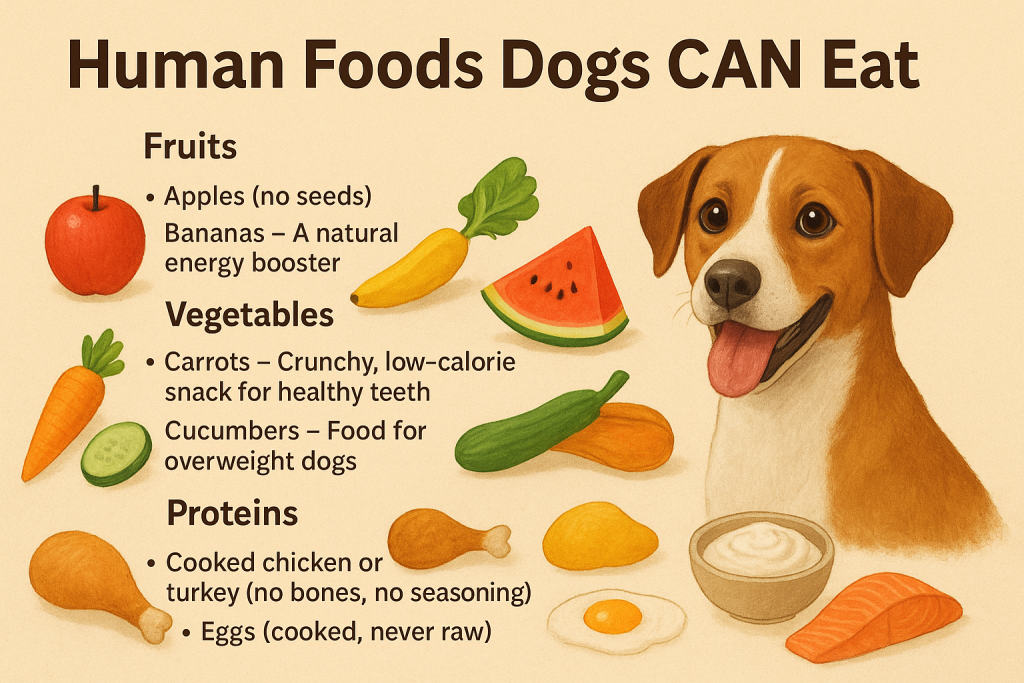
Fruits
- Apples (no seeds) – Great for fiber and vitamin C.
- Bananas – A natural energy booster (in moderation).
- Blueberries – Rich in antioxidants.
- Watermelon (seedless) – Hydrating summer treat.
Vegetables
- Carrots – Crunchy, low-calorie snack for healthy teeth.
- Cucumbers – Good for overweight dogs (low-calorie).
- Pumpkin (plain, cooked) – Helps with digestion.
- Green beans – Packed with fiber and vitamins.
Proteins
- Cooked chicken or turkey (no bones, no seasoning) – High-quality protein source.
- Eggs (cooked, never raw) – Excellent protein and amino acids.
- Plain yogurt – Probiotic boost (avoid flavored or sweetened ones).
- Salmon (cooked, boneless) – Omega-3 rich for healthy skin and coat.
💡 Tip: Introduce new foods gradually to avoid tummy troubles.
Foods that Dogs CAN’T Eat
These foods are harmful or toxic to dogs and should be avoided completely:
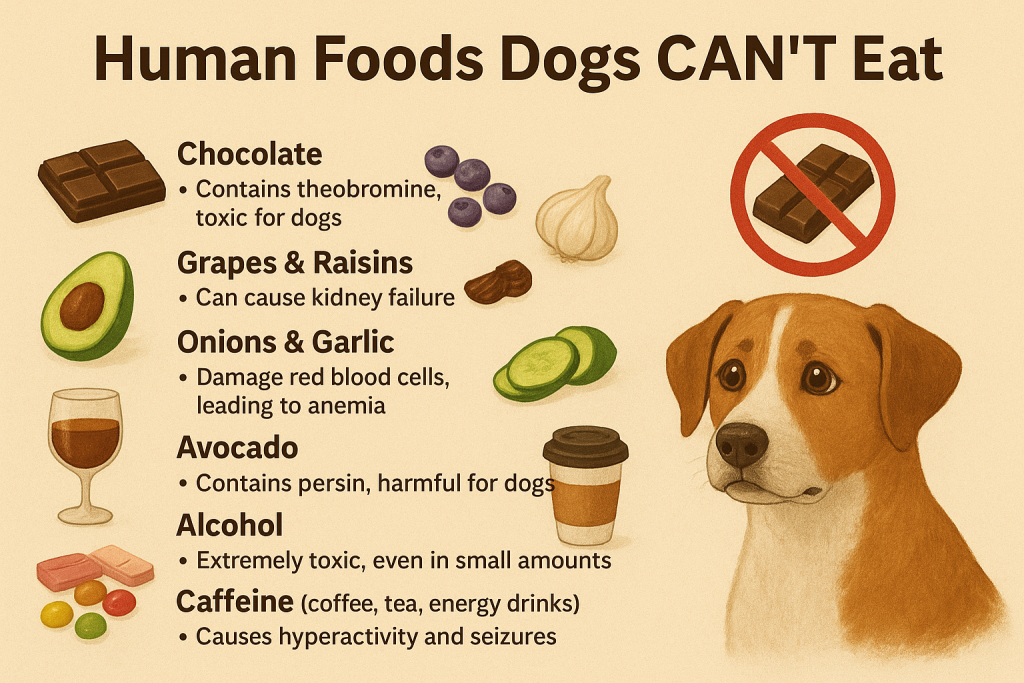
- Chocolate – Contains theobromine, toxic for dogs.
- Grapes & Raisins – Can cause kidney failure.
- Onions & Garlic – Damage red blood cells, leading to anemia.
- Avocado – Contains persin, harmful for dogs.
- Alcohol – Extremely toxic, even in small amounts.
- Caffeine (coffee, tea, energy drinks) – Causes hyperactivity and seizures.
- Xylitol (sugar substitute in gum, candies, peanut butter) – Dangerous drop in blood sugar, liver failure.
- Macadamia nuts – Cause weakness, vomiting, and tremors.
Foods Dogs Can Eat in Moderation Only
Some foods aren’t toxic but should only be given in small amounts:
- Cheese – Small bites are fine, but too much causes digestive upset.
- Peanut Butter (xylitol-free) – Dogs love it, but keep it limited due to fat content.
- Rice & Pasta (plain, cooked) – Safe but best as an occasional filler.
- Sweet potatoes – Nutritious but must be cooked and served plain.
Tips for Dog Lovers
- Always check ingredients before sharing food. Even small traces of harmful substances (like xylitol in peanut butter) can be dangerous.
- Use dog-friendly treats when training instead of table scraps.
- If your dog accidentally eats something harmful, contact your vet immediately.
- Keep a list of emergency vet hotlines handy.
Order Now! Food that your Dog Loves
Here are some useful, safe options for your pup:
- ✅ Dog-Friendly Peanut Butter (Xylitol-Free)
- ✅ Freeze-Dried Chicken and Blueberry Dog Treats
- ✅ High-Protein Salmon Dog Food
Conclusion
Dogs are family, and we want them to enjoy life just like us. While some foods can make healthy snacks, others can pose serious health risks. Knowing the difference helps you protect your pup’s well-being while still sharing those special snack moments.
FAQ: Human Foods Dogs Can & Can’t Eat
1. Can dogs eat bread?
Yes, plain bread in small amounts is safe, but it doesn’t add much nutrition. Avoid bread with raisins, garlic, or nuts.
2. Is milk good for dogs?
Some dogs are lactose intolerant. A small amount may be okay, but it can cause diarrhea in sensitive dogs.
3. Can dogs eat peanut butter?
Yes, but only if it’s xylitol-free and given in moderation.
4. Are eggs safe for dogs?
Cooked eggs are safe and nutritious. Avoid raw eggs as they carry risks of salmonella.
5. What should I do if my dog eats chocolate?
Call your vet immediately. The toxicity depends on the dog’s size and the amount/type of chocolate consumed.
Leave a Reply