


Money can be your best friend or worst enemy; it depends on how you manage it. While earning more is always attractive, the key to long-term financial success is a habit of smart saving. Saving money is not just about putting cash in the bank; it creates financial freedom, reduces stress, and provides options in life.
This article will explore 10 smart saving habits that can change your financial life, supported by real examples. If you are starting your career, managing a family, or planning for retirement, these practical tips will help you build wealth step by step.
1. Pay Yourself First
The golden rule of personal finance is to pay yourself first. Instead of saving whatever is left after expenses, make savings your top priority. The idea is simple: the moment you receive your income, set aside a fixed percentage—say 10–20%—into a savings or investment account before spending on anything else. This habit ensures you consistently build wealth, regardless of how much you earn. By automating this process, you won’t even miss the money, and over time, small contributions will grow into a strong financial cushion. Paying yourself first creates discipline, security, and the foundation for long-term financial freedom.
Example: Anita, a 28-year-old software engineer from Pune, started saving 20% of her salary by setting up an automatic transfer into her savings account on payday. Within two years, she built a ₹5 lakh emergency fund, giving her peace of mind when her company downsized during COVID-19.
Note: Automate the process. Starting with just 5–10% of your income can grow your savings faster than you expect.
2. Build an Emergency Fund
Building an emergency fund is one of the smartest financial habits we can adopt. Life is full of uncertainties—unexpected medical bills, job loss, or urgent repairs can disrupt your budget instantly. Having a dedicated fund acts as a safety net, protecting you from debt and stress during tough times. Ideally, save 3–6 months of living expenses and keep it in a separate, easily accessible account. Avoid dipping into it for non-essentials—this fund is strictly for emergencies. By preparing in advance, you’ll gain peace of mind, financial stability, and the confidence to handle life’s challenges without panic.
Example: Rohit, a small business owner in Delhi, saved six months of expenses in a liquid fund. When his shop had to shut during lockdown, he didn’t panic. His emergency fund helped him pay rent, support his family, and restart when conditions improved.
3. Track Your Expenses Religiously
Tracking our expenses religiously is one of the most effective ways to take control of our money. Most people don’t realize how much they spend on small, everyday items like food delivery, subscriptions, or impulse shopping until they see the numbers clearly. By counting every rupee—whether through apps, spreadsheets, or even a notebook—we will identify spending patterns and unnecessary leaks in your budget. This awareness helps us cut back on wasteful habits and redirect that money toward savings or investments. Remember, you can’t manage what you don’t measure, and expense tracking is the first step toward financial discipline.
Real-life example:
Priya, a marketing manager, used a money-tracking app and found she was spending ₹4,000 a month on coffee and snacks. By cutting this in half, she redirected ₹2,000 monthly into her SIP (Systematic Investment Plan), which can grow into lakhs over the next decade.
Pro tip: Use apps like Walnut or Moneyfy, or even simple Excel sheets to track your spending patterns.
4. Differentiate Between Needs and Wants
Knowing the difference between needs and wants is essential for smart money management. Needs are the basics that we cannot live without—such as rent, groceries, utilities, and healthcare. Wants are non-essentials that add comfort or pleasure, like designer clothes, gadgets, or frequent dining out. Excess spending often blurs this line, draining your savings and delaying financial goals. Before making purchases and asking ourselves, “Do I need this, or just want it?”, we can make more conscious choices. Prioritizing needs while limiting wants helps you save consistently and build long-term financial security without unnecessary stress.
Example: Akash, 25, wanted the latest iPhone but realized his current phone still worked fine. Instead of spending ₹1.2 lakh, he bought a mid-range phone for ₹25,000 and invested the difference. Five years later, that investment grew to ₹1.9 lakh—more than the price of his dream phone.
Pro tip: Before making a purchase, ask yourself: Do I need this, or do I just want it? Will this matter a year from now?
5. Use the 50/30/20 Rule
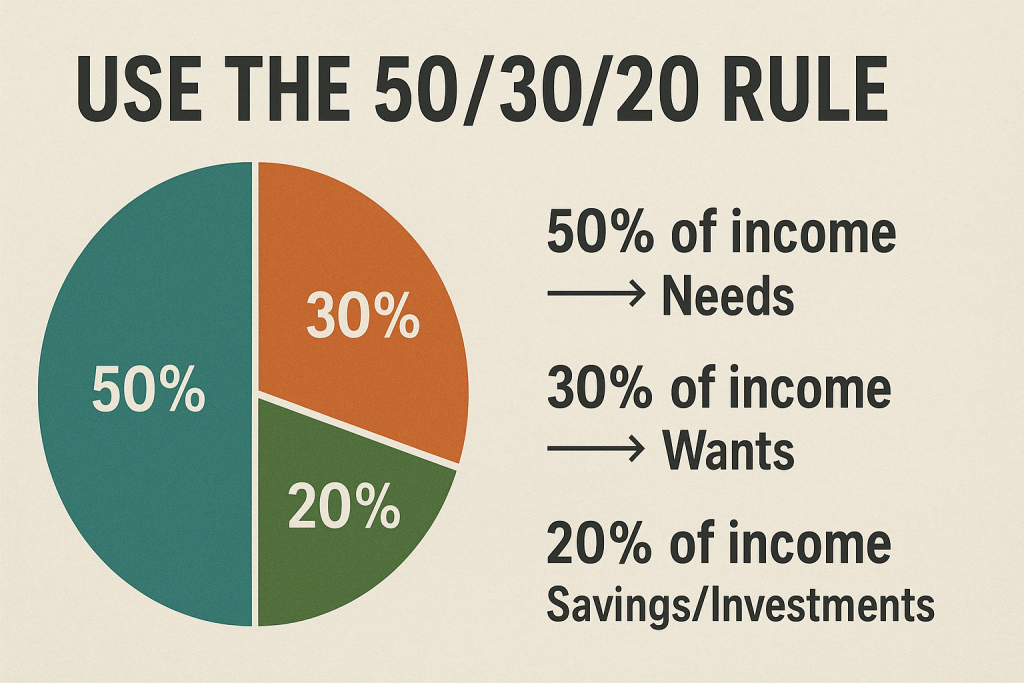
The 50/30/20 rule makes budgeting simple and effective, helping you manage money without stress. It divides your income into three clear categories: 50% for needs like rent, groceries, and bills; 30% for wants such as dining out, shopping, or entertainment; and 20% for savings or investments to secure your financial future. This method ensures you cover essentials, enjoy life, and build wealth consistently. It’s flexible, easy to follow, and works for all income levels. By sticking to this framework, you can balance responsibility with enjoyment while steadily moving toward financial freedom and long-term stability.
50% of income → Needs
30% of income → Wants
20% of income → Savings/Investments
Example: Neha, a newly married teacher, used this rule with her husband. They allocated 50% to essentials like rent and groceries, 30% to lifestyle (movies, vacations), and 20% to savings. Within three years, they saved enough for the down payment on their first home.
Pro tip: Adjust the percentages to fit your lifestyle. If you want to build wealth, aim for 30–40% savings.
6. Avoid Lifestyle Inflation
To build long-term wealth, we need to avoid lifestyle inflation. As our income increases, we feel the urge to spend more on luxury items—like cars, vacations, or bigger homes. While occasional rewards are fine, constantly upgrading our lifestyle can trap us in a cycle where expenses rise as fast as earnings. This leaves little room for savings or investments. Instead, we need to maintain a modest lifestyle and direct extra income toward savings, investments, or debt repayment. By resisting lifestyle inflation, we will accelerate financial growth, achieve goals faster, and create a safety net for the future—without being burdened by unnecessary expenses.
Example: Ramesh received a big promotion and doubled his salary. Instead of buying a new car, he kept his old one and increased his investment contributions. Within five years, he built a portfolio that now provides passive income, while many peers are dealing with EMIs.
Pro tip: Each time you get a raise, increase your savings rate instead of your spending rate.
7. Shop Smart and Use Discounts
Smart savers know how to make their money go further. Using cashback apps, discount coupons, bulk buying, and waiting for festive sales can save you thousands each year.
Real-life example:
Sneha, a homemaker, saves nearly ₹15,000 a year by using grocery apps with cashback offers and planning purchases during festive sales. She then invests these savings in a recurring deposit.
Pro tip: Don’t chase every discount. Buy only what you actually need and save the difference.
8. Automate Your Investments
Staying disciplined is tough when money sits idly in your account. That’s why automation is important. SIPs (Systematic Investment Plans), recurring deposits, and automated transfers ensure you invest consistently without relying on willpower.
Example: Siddharth set up a monthly SIP of ₹5,000 at age 24. Without thinking about it, he built a portfolio worth over ₹20 lakh by age 35. Automation kept him invested through market ups and downs.
Pro tip: Treat your investments like EMI payments—you don’t miss them, so don’t skip your savings either.
9. Cut Down on Debt and EMIs
High-interest loans and credit card debt can erode your wealth. Paying only the minimum due is a financial trap. Instead, prioritize paying off debts with the highest interest rates first.
Example: Kavita, a young professional, had ₹1 lakh in credit card debt with a 36% interest rate. She stopped unnecessary shopping, created a repayment plan, and cleared the debt in one year. Today, she saves the money she once wasted on interest.
Pro tip: Avoid buying things that lose value (like gadgets or cars) on EMI. If you can’t pay for it in full, you probably can’t afford it.
10. Surround Yourself With Financially Smart People
Your environment shapes your habits. If your friends always spend on luxury items, you might feel pressured to do the same. Being around financially disciplined people encourages better money habits.

Example: Manoj joined a personal finance community on Facebook. Inspired by others’ success stories, he started tracking his expenses, investing in index funds, and cutting down on wasteful spending. Within three years, he cleared his student loans and began building wealth.
Pro tip: Follow finance influencers, read money books, or join savings challenges to stay motivated.
Frequently Asked Questions (FAQs)
1. How much should I save every month?
A good starting point is 20% of your income. If that’s difficult, start with 5–10% and increase gradually.
2. Should I save or invest first?
First, build an emergency fund (3–6 months of expenses). Once that’s ready, start investing for long-term growth.
3. What are the best savings instruments in India?
- Savings account (for emergency liquidity)
- Fixed deposits / RDs (for short-term goals)
- Mutual funds SIPs (for long-term growth)
- PPF / EPF (for retirement security)
4. How can I stop impulse spending?
Use the 24-hour rule: Wait one day before making non-essential purchases. The urge will usually pass.
5. Can I start saving with a low income?
Yes. Even saving ₹500–₹1000 monthly builds the saving habit. Over time, as your income grows, your savings will too.
Final Thoughts
Developing smart saving habits isn’t about depriving yourself—it’s about creating a financial cushion that gives you freedom. Imagine being debt-free, stress-free, and ready to grab opportunities because you’ve built a solid foundation.
Remember, small consistent actions lead to massive results. Start today by implementing just one habit from this list. With time, these habits will change your financial life forever.
Leave a Reply