

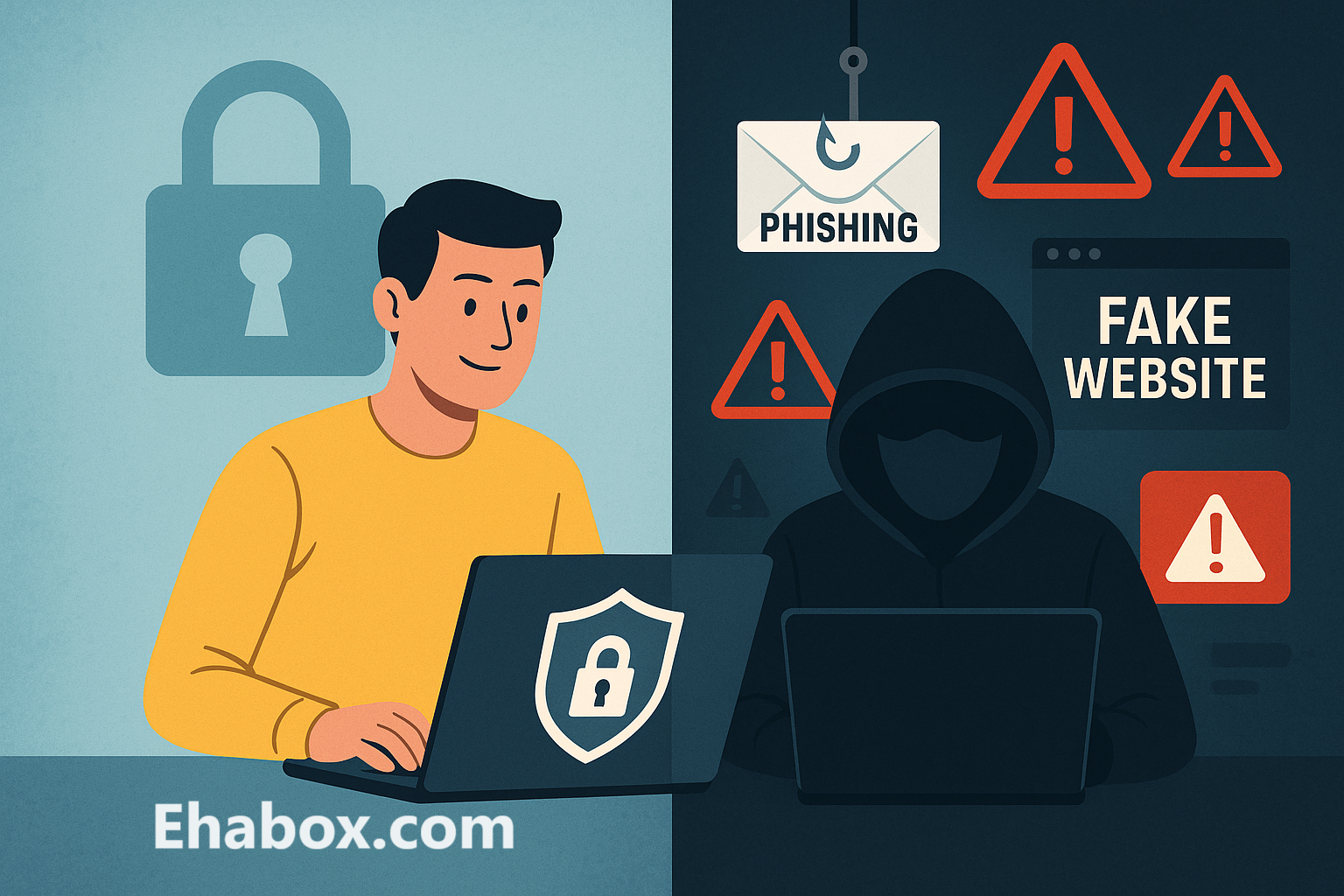
Online fraud has become one of the biggest threats in our digital lives, affecting millions every year. The most common and dangerous types include phishing attacks, where fake emails trick users into sharing passwords or bank details, and online shopping scams, where fraudulent websites steal money without delivering products. OTP and SIM swap fraud allow criminals to access bank accounts, while job scams exploit job seekers by demanding fees. Romance scams emotionally manipulate victims, and crypto frauds lure people with promises of high returns. These scams are dangerous because they cause financial loss and destroy trust and confidence online.
The only way to protect yourself and your family is with awareness and the right precautions. Below are the most common types of fraud and their precautions to protect yourself.
Most Common and Dangerous Types of Online Fraud
1. Phishing Attacks
Phishing attacks are one of the most common forms of online fraud, where scammers pretend to be trusted organizations like banks, e-commerce sites, or even your office. They usually send emails, SMS, or WhatsApp messages containing fake links that look real. For example, you might get an email saying, “Your bank account is blocked. Click here to verify.” Once you click and enter details, the fraudster steals your login credentials.
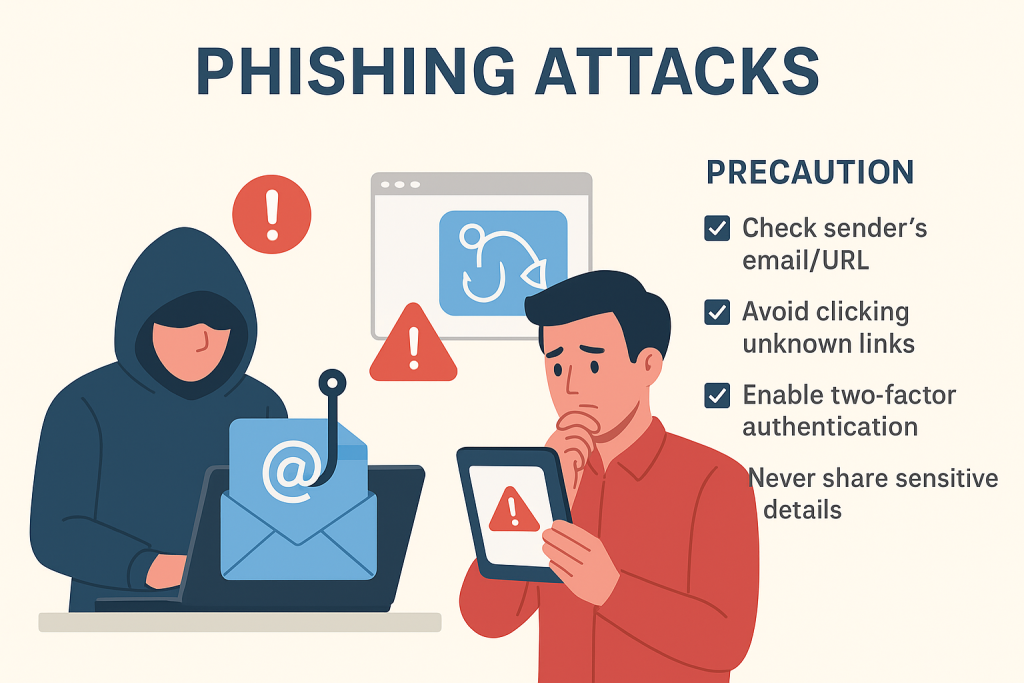
🛡️ Precaution: Always check the sender’s email/URL, avoid clicking unknown links, enable two-factor authentication, and never share sensitive details over messages or calls. Awareness is your strongest defense.
2. Online Shopping Scams
Online shopping scams are rising as more people prefer buying products through e-commerce and social media platforms. Scammers create fake websites or ads offering unbelievable discounts on popular items. For example, you may see a branded smartphone advertised at half the price, but once you pay, either a cheap counterfeit arrives or nothing at all. These scams exploit the excitement of getting a “great deal.”
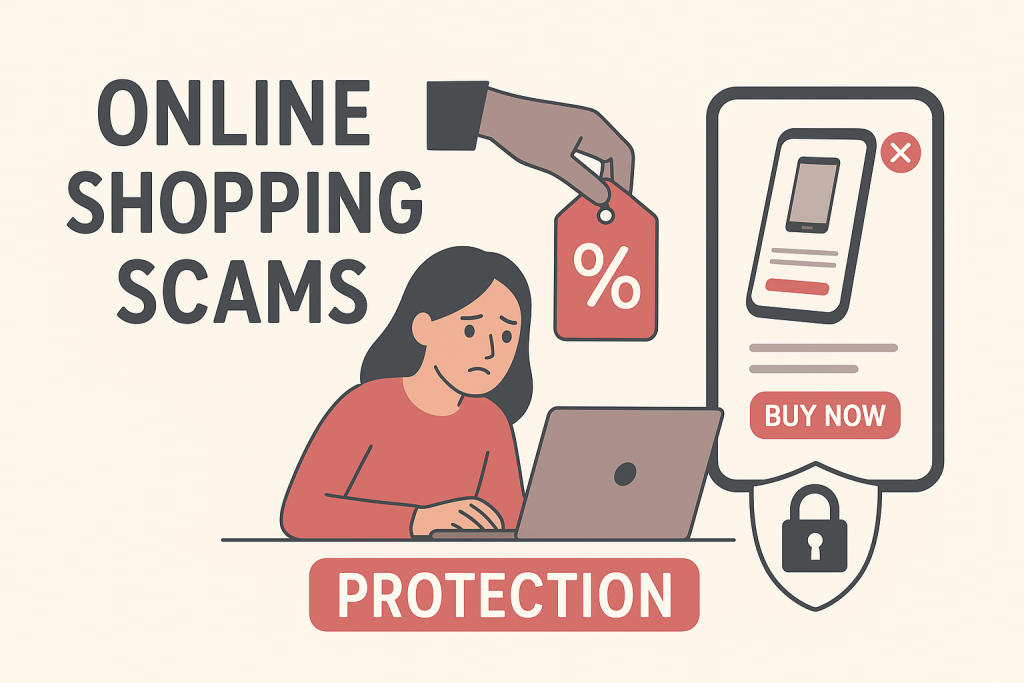
🛡️ Precaution: Always shop from trusted websites, check for HTTPS in the URL, read customer reviews, and avoid deals that look too good to be true. Using cash on delivery or secure payment gateways adds safety.
3. OTP Fraud and SIM Swap
OTP fraud and SIM swap scams are among the most dangerous online frauds because they target your bank accounts and digital wallets. In OTP fraud, scammers trick victims into sharing one-time passwords sent by banks or payment apps, often by posing as customer care representatives. SIM swap is even riskier — fraudsters duplicate your SIM card by convincing the mobile operator, allowing them to receive OTPs meant for you. Once successful, they gain access to your bank and UPI accounts.
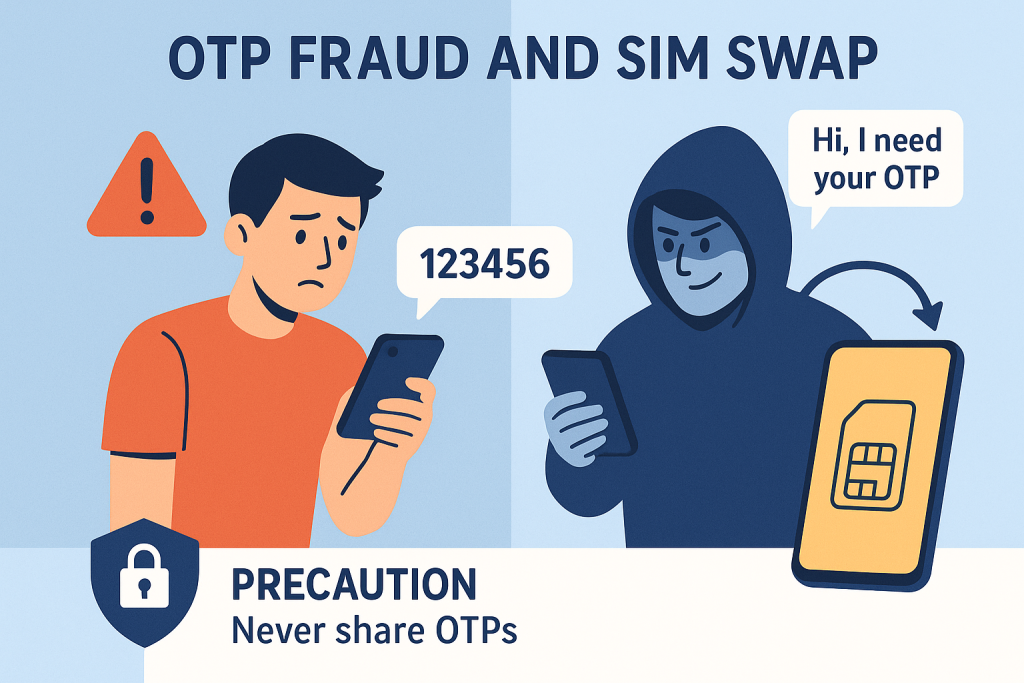
🛡️ Precaution: Never share OTPs, monitor unusual SMS or network issues, and immediately contact your telecom provider if your SIM stops working.
4. Job & Work-from-Home Scams
Job and work-from-home scams exploit people’s need for employment by offering fake opportunities that sound too good to be true. Fraudsters post ads or send emails promising high-paying remote jobs with minimal effort. Once a person shows interest, they’re often asked to pay a “registration fee,” buy training material, or share personal documents. In reality, no job exists — the scammer disappears after collecting money or sensitive data. These scams are dangerous because they prey on financial desperation and hope.
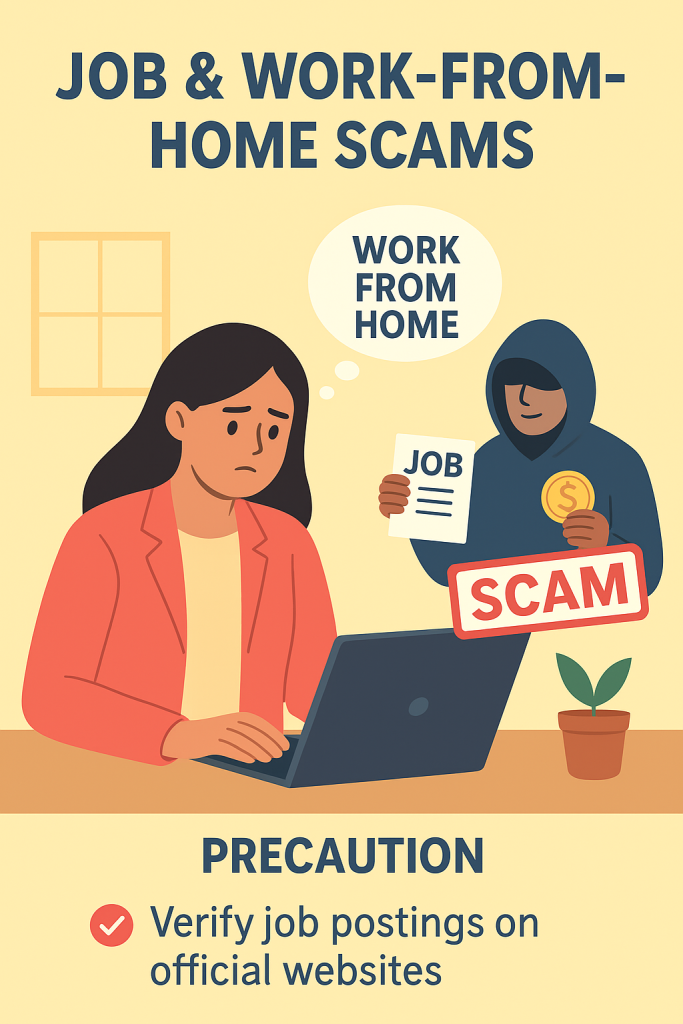
🛡️ Precaution: Verify job postings on official company websites, never pay upfront fees, and research employers before applying.
5. Loan & Investment Scams
Loan & Investment scams are among the most deceptive forms of online fraud, preying on people’s financial needs and dreams. Fraudsters lure victims with promises of instant loans without verification or “guaranteed high returns” on investments. For example, a scammer may pose as a loan provider offering quick approval but demanding upfront fees, which vanish once paid. Similarly, fake investment platforms trick users into depositing money, only to disappear later. To protect yourself, avoid offers that seem “too good to be true,” verify financial institutions on official websites, and never share personal or banking details with unverified sources online.
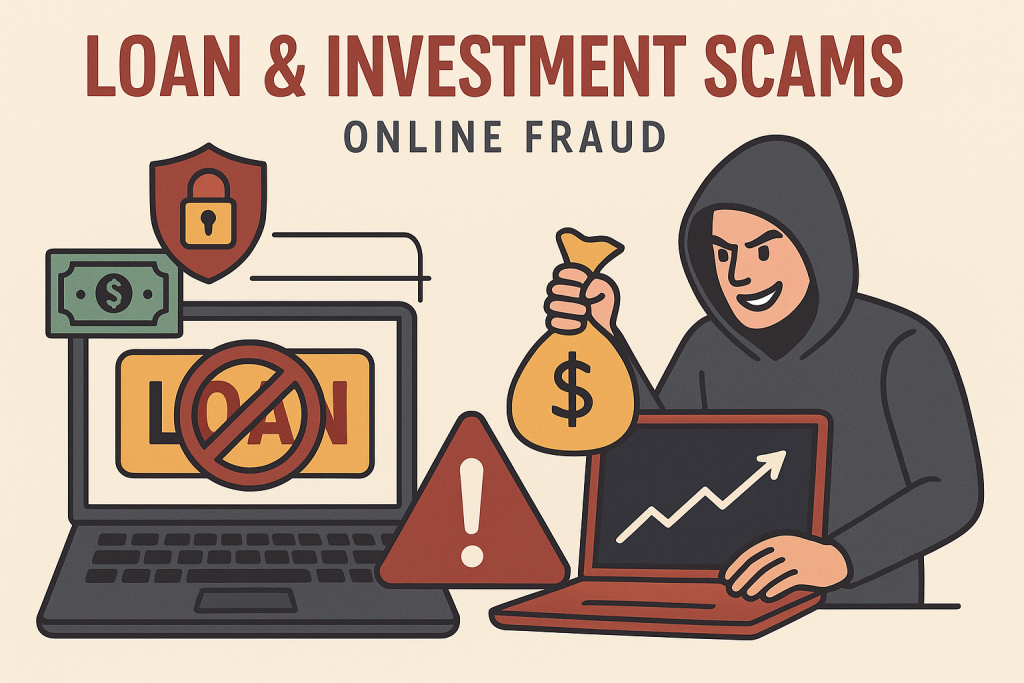
🛡️ Precaution: Use only RBI or SEBI-registered platforms. If it sounds too good to be true, it probably is.
6. Romance and Dating Scams
Romance and dating scams are emotionally devastating forms of online fraud where criminals exploit people’s trust and feelings. Scammers create fake profiles on dating apps or social media, pretending to be loving, caring partners. They gradually build emotional bonds and then invent emergencies—like needing money for medical treatment, travel, or a family crisis. You, blinded by trust, often send money repeatedly, only to realize the person never existed. These scams cause both financial and emotional harm.
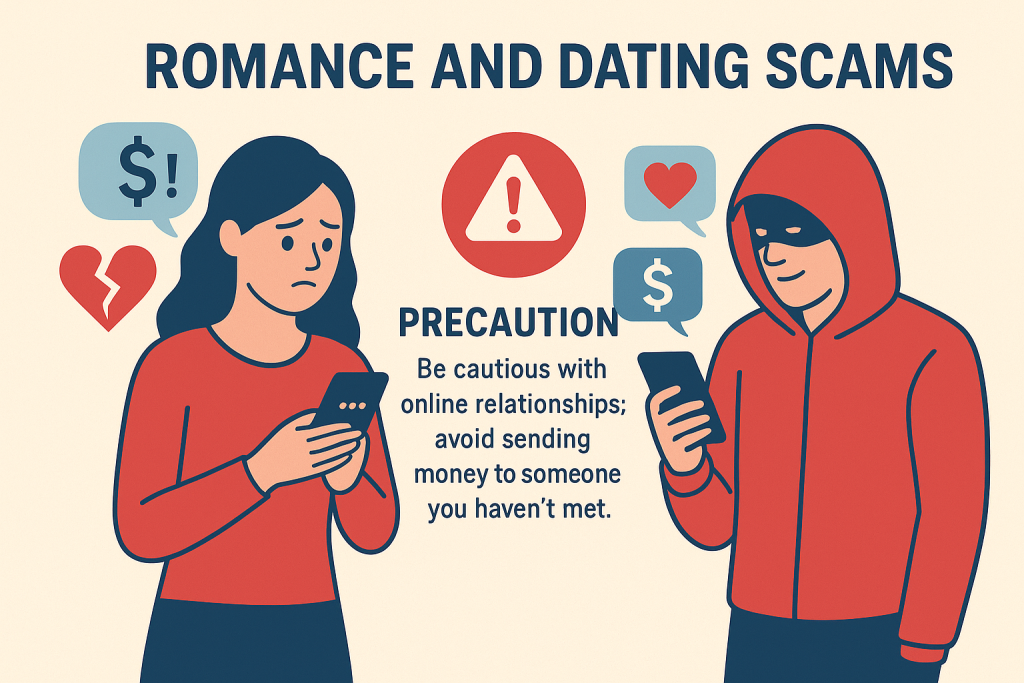
🛡️ Precaution: Be cautious with online relationships, avoid sending money to someone you haven’t met, and verify identities through video calls or background checks.
7. Crypto & Forex Fraud
Crypto & Forex fraud is a rapidly growing online scam that takes advantage of people’s desire to make quick money. Scammers often advertise fake cryptocurrency exchanges, trading platforms, or forex investment schemes, promising “guaranteed high returns.” They lure victims with flashy websites, fake testimonials, and aggressive social media ads. For example, you might be told to invest a small amount and watch it “multiply” on a dashboard—only to find withdrawals blocked later.
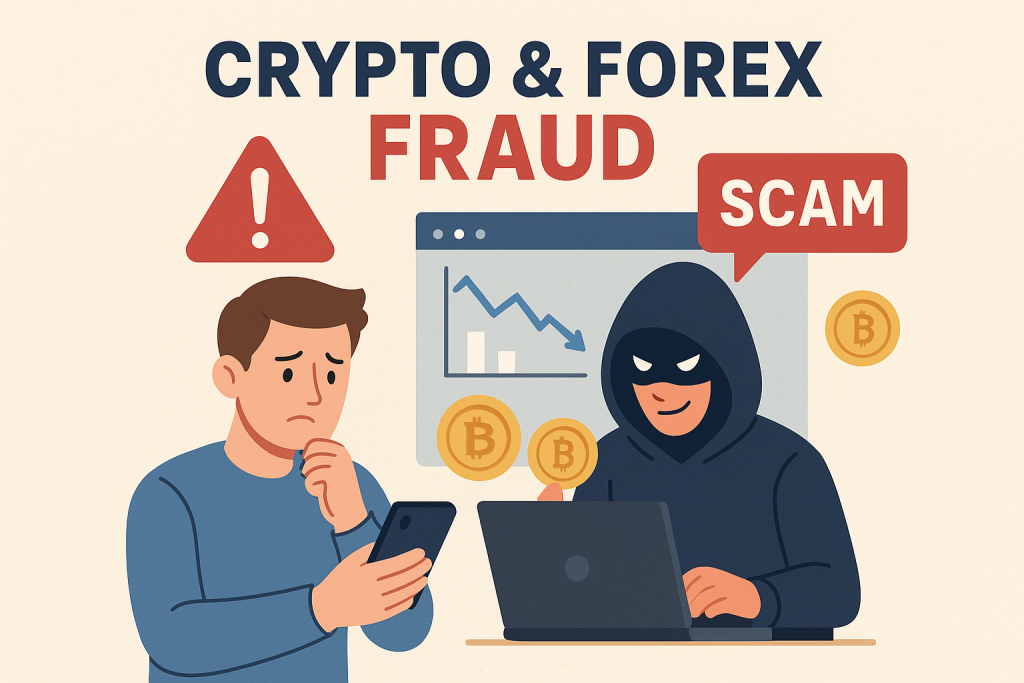
🛡️ Precaution: Always use regulated exchanges, research platforms before investing, beware of unrealistic promises, and remember: if returns seem too good to be true, it’s likely a scam.
Top Online Safety Precautions Everyone Should Follow
- Use strong, unique passwords for each account
- Enable 2FA or biometric authentication
- Update software and antivirus regularly
- Don’t download apps or files from unknown sources
- Educate family members, especially the elderly and teens
- Use verified digital wallets and payment apps
- Report cyber fraud to cybercrime.gov.in or your local cyber police
First Things to Do When Online Fraud Happens
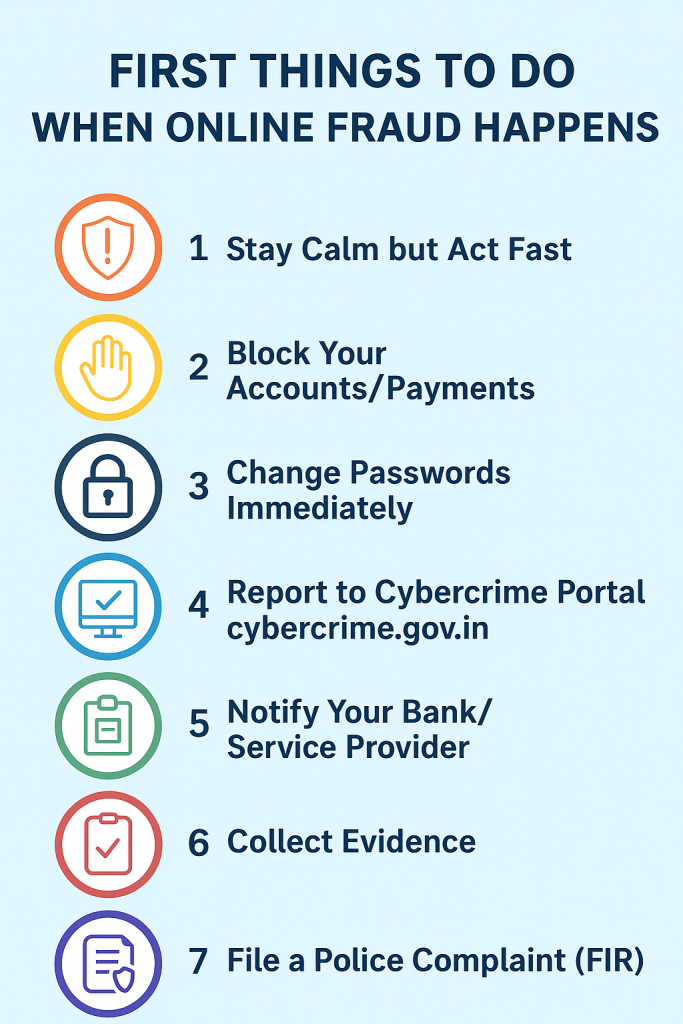
- Stay Calm but Act Fast – Don’t panic; quick action increases the chances of recovery.
- Block Your Accounts/Payments – Contact your bank or payment app (UPI, Paytm, GPay, etc.) and request to block your account or freeze suspicious transactions.
- Change Passwords Immediately – Update passwords for your email, bank, and social media accounts to prevent further misuse.
- Report to Cybercrime Portal – File a complaint at the official Government portal: cybercrime.gov.in or call 1930 (Cyber Crime Helpline in India).
- Notify Your Bank/Service Provider – Provide transaction details and request a chargeback or reversal if possible.
- Collect Evidence – Save screenshots of chats, emails, numbers, and transaction receipts to strengthen your case.
- File a Police Complaint (FIR) – Especially for large financial losses or identity theft.
Note: The faster you report (within 24–48 hours), the higher your chances of recovering money or stopping misuse.
❓FAQs: Online Fraud and Precautions
Q1. What is the most common online fraud in India?
Ans: Phishing attacks and UPI frauds are among the most reported online frauds in India. Many cases involve fake job offers, shopping scams, and OTP fraud.
Q2. How do I know if a website is safe to buy from?
Ans: Look for “https://” in the address, a padlock icon, and read customer reviews. Avoid sites with bad grammar, no contact info, or suspicious discounts.
Q3. Can I recover money lost in online fraud?
Ans: It depends. If reported quickly (within 24–48 hours), there’s a chance banks or authorities may help. Report immediately at cybercrime.gov.in and your bank.
Q4. What should I do if I receive a suspicious message or call?
Ans: Don’t click links or share information. Block the sender, take a screenshot, and report to the cyber police or relevant platforms.
Q5. Are digital payments safe in India?
Ans: Yes, when done using verified apps like Paytm, Google Pay, PhonePe, or official bank apps with security features enabled.
Conclusion
Online fraud is a silent predator — invisible, fast, and often devastating. But you’re not helpless. A little awareness, a dose of skepticism, and proactive digital hygiene can go a long way in keeping you and your loved ones safe online.
Let this be your reminder to stay alert, stay updated, and never let your guard down in the digital world.
Leave a Reply